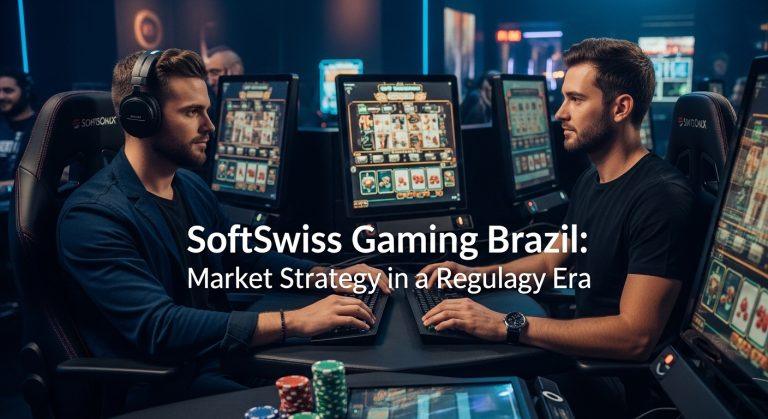

The Brazilian gaming and betting landscape is reshaping itself as mobile audiences, streaming culture, and regulatory conversations converge, and sbc Gaming Brazil serves as a lens through which operators, leagues, and policymakers gauge opportunity and risk.
Market structure and SBC framing in Brazil
Brazil’s ecosystem is defined by a large, youthful, mobile-first population and a regulatory environment that is evolving rather than static. In this context, sbc Gaming Brazil emerges as more than a brand name; it acts as a framework for how operators, leagues, and media negotiate licenses, taxation, and consumer protections. Observers note that the Rio summit agenda — and the industry conversations it catalyzes — often foreground responsible gaming, data privacy, and fair play as prerequisites for scalable growth. For Brazilian players, the practical effect is clarity: promotions and products tailored to local rhythms, payment rails that work with popular wallets, and language and support in Portuguese. For operators, the challenge is to balance speed to market with governance overhead, ensuring that rapid deployment does not outpace compliance or ethics. The trajectory suggests a market win for those who localize product design and partner with homegrown teams rather than transplanting foreign templates without adaptation.
From a business perspective, the incentive structure in Brazil rewards teams and brands that can translate global entertainment value into locally resonant experiences. This often means streaming-friendly formats, sponsorships that align with Brazilian sports and esports cultures, and media rights arrangements that favor long-term fan engagement over one-off campaigns. In practical terms, operators are increasingly weighing how to deploy data-driven player journeys that respect age-gating, privacy preferences, and responsible disclosure of risks. The result is a nascent but discernible shift toward sustainable monetization models where revenue growth and player protection reinforce each other rather than tug in opposite directions.
Competitive dynamics and audience behavior in the SBC ecosystem
Brazilian audiences are highly mobile, socially driven, and content-hungry. The country’s esports and gaming communities prize authenticity, local language, and access to creator ecosystems that translate global trends into relatable narratives. This creates fertile ground for partnerships that blend professional teams, streamers, and operators into cohesive ecosystems. SBC’s network, by connecting organizers, developers, and advertisers, helps local players scale their reach beyond traditional borders while offering operators predictable channels for audience acquisition. The result is a more vibrant market where sponsorships, tournaments, and online events can stack value for fans and sponsors alike. Yet audience expectations also raise the bar for responsible and transparent practices: clear odds, accessible support, and straightforward terms become differentiators in a crowded landscape. If Rio’s program emphasizes cross-market collaboration and knowledge transfer, Brazilian operators stand to gain from standardized benchmarks, shared best practices, and multi-market promotions that reflect regional preferences and regulatory realities.
Content consumption patterns in Brazil reinforce these dynamics. Viewers increasingly consume live broadcasts of tournaments, analyst discourse, and behind-the-scenes content in Portuguese, with mobile devices serving as the primary gateway. This has practical implications for product design: lighter, faster-loading experiences, localized streaming schedules, and promotions that respect cultural moments such as football calendars and school terms. For players and fans, these shifts translate into more predictable engagement opportunities and better access to community platforms that reinforce safe, supervised participation in gaming activities.
Policy, culture, and responsible gaming in a fast-evolving market
Policy debates in Brazil increasingly center on responsible gaming as a core growth driver rather than a constraint. In this frame, industry bodies and event organizers tie efforts to public welfare with business viability. Partnerships that involve groups like IBJR illustrate a disciplined approach to integrating responsible gaming into market entry narratives and promotional campaigns. For operators, such alignment means that compliance is not just a legal checkbox but a competitive advantage: transparent communications, age verification, self-exclusion tools, and clear disclosure of risks help build trust with Brazilian players. The cultural challenge is to maintain engagement without normalizing risky behavior; the practical measure is to deploy user-centric controls and educational content that travel with a player through the product journey. The potential tension between rapid growth and safeguarding norms will hinge on how quickly policy translates into practical standards and how rigorously firms implement them at scale.
Beyond formal regulation, Brazilian gaming culture prizes community and accessibility. Localized content, fair competition, and inclusive participation matter as much as incentives and prizes. In this sense, responsible gaming is not only compliance but a long-run strategy for reputation management and fan retention. As Rio’s discussions unfold, operators that embed responsible practices into every touchpoint — from onboarding to post-play support — will likely outpace peers that treat safeguards as an afterthought. The long horizon here favors steady, transparent progress over headline-driving but risky campaigns.
Roadmap for stakeholders: concrete bets in a Brazilian context
For operators, the path forward is to localize: Portuguese-language interfaces, culturally resonant promotions, and partnerships with Brazilian teams and influencers that anchor campaigns in real communities. For organizers and venues, designing events that balance spectacle with accessibility can expand the market by turning casual spectators into loyal fans. Regulatory and industry bodies should continue refining guidelines that standardize responsible gaming across platforms, ensuring that every stakeholder has a common reference point for expectations and accountability. For developers and publishers, the emphasis should be on scalable content pipelines that accommodate mobile-first play and cross-platform experiences, while maintaining robust privacy protections and clear user consent flows. The combined effect of these bets is a Brazil-ready ecosystem where growth is sustainable, fan-centric, and principled.
In practical terms, a successful strategy will pair local market intelligence with international networks. That means leveraging SBC’s cross-border connections to pilot localized topics, share success cases, and recruit Brazilian talent for leadership roles within regional teams. It also means aligning product roadmaps with regulatory milestones and social responsibility targets, so that expansion does not outpace protection for players. In the near term, expect more localized content formats, more Brazilian-language partnerships, and a continuing emphasis on data-driven decision making that places player welfare at the center of growth plans.
Actionable Takeaways
- Prioritize localization: design mobile-first experiences and promotions that reflect Brazilian gamers’ preferences and rhythms.
- Invest in responsible gaming: implement accessible tools, clear disclosures, and Portuguese-language education to build trust with players.
- Strengthen local partnerships: collaborate with Brazilian teams, influencers, and federations to create authentic fan ecosystems.
- Align with evolving regulation: stay ahead of licensing changes and advertising rules by integrating compliance into product roadmaps.
- Leverage SBC networks for growth: use cross-border connections to accelerate market access, knowledge sharing, and event-based engagement in Brazil.